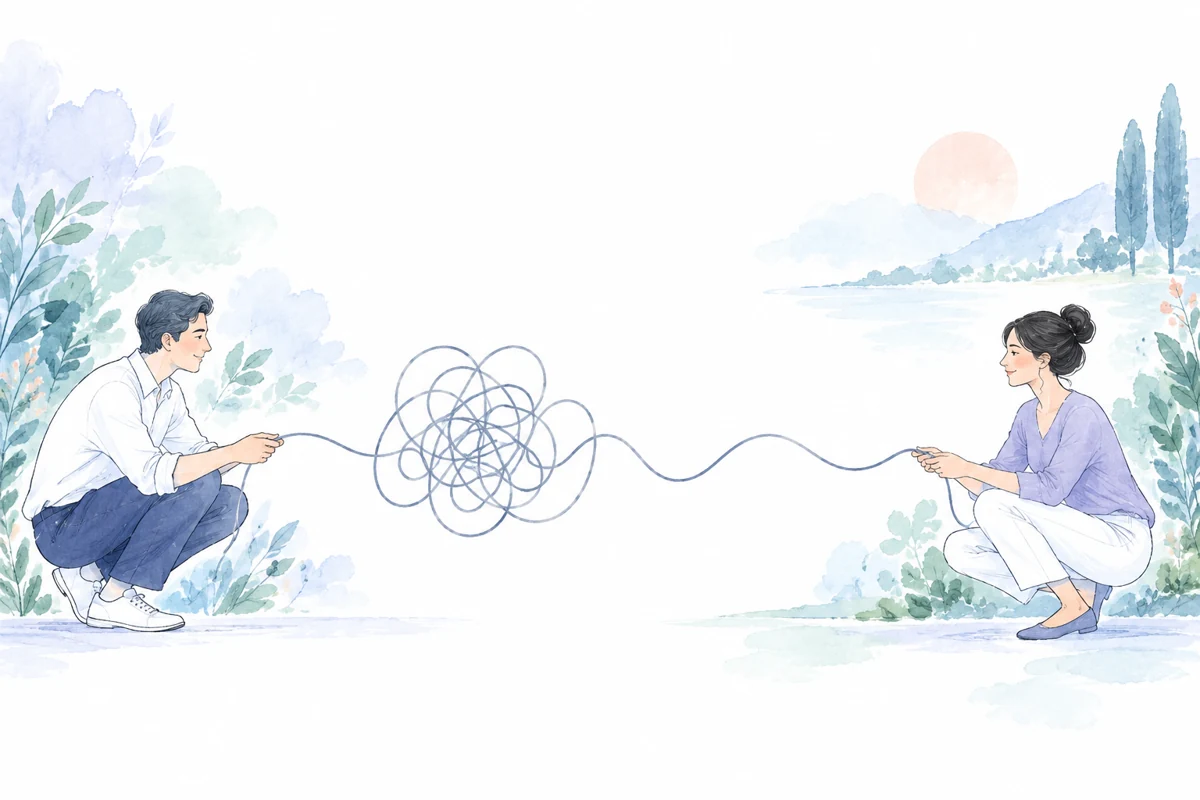
The same response won’t fit every stage of a conflict. Timing matters.
One person wants to go left, another right. A third appears indifferent but won’t speak to you for six months unless they get their way. A fourth simply wants everything to stop changing. Welcome to teamwork.
The bad news: there is no single correct response to every conflict. The good news: that doesn’t leave us helpless. First we need to recognise what is happening between people right now.
After a heated argument, a detailed investigation into causes may be premature. Emotions don’t necessarily disappear when people stop shouting. It can help to settle the situation first and agree how to return to the subject safely.
Disagreement noticed earlier can reveal something useful: different expectations, an overlooked problem or another possible solution. The aim isn’t a team without differences. It’s a team that can work with them.
The anatomy of conflict
- Calm
- Warning signs
- Differences grow
- Polarisation
- Separation
- Clash and destruction
- Cooling down
- After the conflict
- Cooperation resumes
How a conflict changes
An orientation map, not a timetable every disagreement follows. Watch both emotional intensity and people’s willingness to discuss the issue constructively.
- Calm
- Cooperation is stable. Regular communication and feedback help catch the first disagreements.
- Warning signs
- Views diverge and misunderstandings appear. Ask questions, check meanings and seek mutual understanding.
- Differences grow
- Intensity rises and attention shifts towards differences. Facilitation, coaching or structuring the issue may help.
- Polarisation
- A shared perspective breaks down. Return to the issue, make differences visible and look for willingness to approach it rationally.
- Separation
- Communication decreases or remains mostly oppositional. Consider a break and the conditions for returning to dialogue; mediation may help.
- Clash and destruction
- Strong emotions, insults and put-downs overwhelm the issue. Stop harmful behaviour first and separate the parties if needed. Leaders must make boundaries clear.
- Cooling down
- Relief, sometimes resignation, follows. Begin with simple, non-contentious topics. Quieter voices do not yet mean the conflict is resolved.
- After the conflict
- Explore causes individually before coming together. Analysis, feedback, facilitation or mediation may help. Returning too quickly can trigger renewed escalation.
- Cooperation resumes
- Clarify agreements and next steps. Check whether improved understanding carries through into everyday behaviour.
Humour can help early on if it does not dismiss someone’s experience. At the peak of a conflict, safety and clear boundaries come first; detailed analysis can follow later.