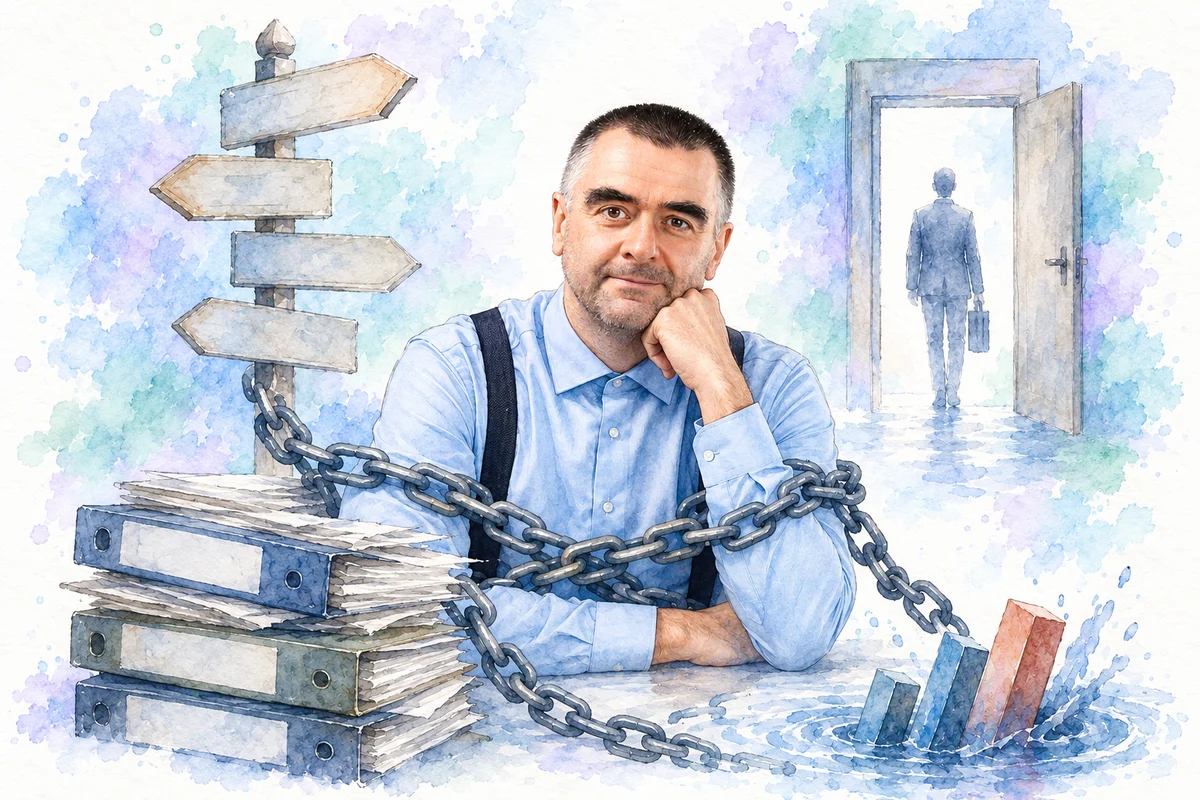
Sometimes we keep a problem alive because we once championed it. Even a project gate may not save us.
Which project did you last cancel? Not postpone. Not put on hold. Cancel. Most people can think of one, but it takes a moment. And it was usually a while ago.
In 1976, Barry Staw studied why people stick with their decisions when things go badly. Participants had to decide whether to put more money into an underperforming division. Some had made the original investment themselves; others had inherited the decision.
The same numbers. The same bad news. A different relationship with the earlier decision. Those responsible for the initial investment were more inclined to carry on. Prisoners of their own commitment.
Sometimes we keep a mess alive simply because we once argued for it. This goes beyond projects. In our personal lives too, the more we have invested in something, the harder it can be to admit that the next step no longer makes sense.
Even a gate review may not protect a project. Figuratively speaking, it isn’t just the project passing through the gate. It’s also the person who once defended it, now being asked whether their own decision deserves more money.
What helps? Set the stopping criteria before the project begins. Involve someone who wasn’t responsible for the original decision. Keep roles appropriately separate: a refreshing dose of SoD — Segregation of Duties. More than an administrative exercise, it can create the distance we need.
Stopping something that isn’t working is part of agility in practice. Starting quickly isn’t enough. We also need to know when to stop.
Further reading: Staw, B. M. (1976). Knee-deep in the Big Muddy: A study of escalating commitment to a chosen course of action.